Showing posts with label history. Show all posts

Thursday, April 30

100 Days of Obama Spin. What else is new?

For the first 100 days, President Obama has stuck to the facts--mostly. Except for a few very small and meaningless deceptions... nothing wrong with dishonesty as long as it's not huge right? Republicans have struck back with some of their own spin. Chain e-mails are apparently the worst culprit. Is anyone still giving heed to these emails for anything other than amusement? The medium has been completely invalidated.

Fact Check: 100 Days of Spin.

Once again the truth can be found somewhere in the middle (as long as that middle is free from bias). I do not think it is possible to get reliable facts or accuracy from either side.

This is a problem I have seen with interpreting history as well. Are the writers of the so-called history books we are reading free from any kind of agenda or bias? If they are not, are we aware of the lenses through which they are writing or even gathering their information?

Monday, October 27

One-Sided Mormon History

Under the Banner of Heaven Under the Banner of Heaven by Jon Krakauer

My review


Rating: 2 of 5 stars
I like my history at least striving for accuracy and balance, and this book almost completely failed in that category. While the sensational style kept it very interesting, I think the author did a great disservice in leaving out all the relevant historical details that don't confirm his view. (Which is what many decidedly pro-LDS books suffer from.) In no way could this be considered a scholarly work. Two stars for being entertaining, and for the interesting thoughts about whether people who claim to receive revelation should be declared mentally incompetent in a trial. Has anyone else read this book? Any thoughts?

Wednesday, September 17

Joseph Smith and Losing Faith Over History

This is a paper presented by historian Richard Bushman (author of "Joseph Smith: Rough Stone Rolling") at the seminar "Joseph Smith and His Critics." It explains "the experience of Latter-day Saints who are or have been troubled by historical aspects of Joseph Smith and the restoration of the gospel." 

Credit to BHodges for the text, and Deseret News and LDS.org for the photos.

Increasingly teachers and church leaders at all levels are approached by Latter-day Saints who have lost confidence in Joseph Smith and the basic miraculous events of church history. They doubt the First Vision, the Book of Mormon, many of Joseph’s revelations, and much besides. They fall into doubt after going on the Internet and finding shocking information about Joseph Smith based on documents and facts they had never heard before. A surprising number had not known about Joseph Smith’s plural wives. They are set back by differences in the various accounts of the First Vision. They find that Egyptologists do not translate the Abraham manuscripts the way Joseph Smith did, making it appear that the Book of Abraham was a fabrication. When they come across this information in a critical book or read it on one of the innumerable critical Internet sites, they feel as if they had been introduced to a Joseph Smith and a Church history they had never known before. They undergo an experience like viewing the famous picture of a beautiful woman who in a blink of an eye turns into an old hag. Everything changes. What are they to believe?

Often church leaders, parents, and friends, do not understand the force of this alternate view. Not knowing how to respond, they react defensively. They are inclined to dismiss all the evidence as anti-Mormon or of the devil. Stop reading these things if they upset you so much, the inquirer is told. Or go back to the familiar formula: scriptures, prayer, church attendance.

The troubled person may have been doing all of these things sincerely, perhaps even desperately. He or she feels the world is falling apart. Everything these inquirers put their trust in starts to crumble. They want guidance more than ever in their lives, but they don’t seem to get it. The facts that have been presented to them challenge almost everything they believe. People affected in this way may indeed stop praying; they don’t trust the old methods because they feel betrayed by the old system. Frequently they are furious. On their missions they fervently taught people about Joseph Smith without knowing any of these negative facts. Were they taken advantage of? Was the Church trying to fool them for its own purposes?

These are deeply disturbing questions. They shake up everything. Should I stay in the Church? Should I tell my family? Should I just shut up and try to get along? Who can help me?

At this point, these questioners go off in various directions. Some give up on the Church entirely. They find another religion or, more likely these days, abandon religion altogether. Without their familiar Mormon God, they are not sure there is any God at all. They become atheist or agnostic. Some feel the restrictions they grew up with no longer apply. The strength has been drained out of tithing, the Word of Wisdom, and chastity. They partly welcome the new freedom of their agnostic condition. Now they can do anything they please without fear of breaking the old Mormon rules. The results may not be happy for them or their families.

Others piece together a morality and a spiritual attitude that stops them from declining morally, but they are not in an easy place. When they go to church, they are not comfortable. Sunday School classes and Sacrament meeting talks about Joseph Smith and the early church no longer ring true. How can these people believe these “fairy tales,” the inquirers ask. Those who have absorbed doses of negative material live in two minds: their old church mind which now seems naive and credulous, and their new enlightened mind with its forbidden knowledge learned on the internet and from critical books.

A friend who is in this position described the mindset of the disillusioned member this way:
“Due to the process of learning, which they have gone through, these [two-minded] LDS often no longer accept the church as the only true one (with the only true priesthood authority and the only valid sacred ordinances), but they see it as a Christian church, in which good, inspired programs are found as well as failure and error. They no longer consider inspiration, spiritual and physical healing, personal and global revelation limited to the LDS church. In this context, these saints may attend other churches, too, where they might have spiritual experiences as well. They interpret their old spiritual experiences differently, understanding them as testimonies from God for them personally, as a result of their search and efforts, but these testimonies don’t necessarily have to be seen as a confirmation that the LDS church is the only true one.

“Since the social relationships between them and other ward (or stake) members suffer (avoidance, silence, even mobbing) because of their status as heretics, which is usually known via gossip, and since the extent of active involvement and range of possible callings are reduced because of their nonconformity in various areas, there is a risk that they end up leaving the church after all, because they are simply ignored by the majority of the other members.”
He then offers a recommendation:
“It is necessary that the church not only shows more support and openness to these ‘apostates’ but also teaches and advises all members, bishops, stake presidents etc., who usually don’t know how to deal with such a situation in terms of organizational and ecclesiastical questions and – out of insecurity – fail to treat the critical member with the necessary love and respect that even a normal stranger would receive.”
Those are the words of someone who has lost belief in many of the fundamentals and is working out a new relationship to the Church. Other shaken individuals recover their belief in the basic principles and events but are never quite the same as before. Their knowledge, although no longer toxic, gives them a new perspective. They tend to be more philosophic and less dogmatic about all the stories they once enjoyed. Here are some of the characteristics of people who have passed through this ordeal but managed to revive most of their old beliefs.

1. They often say they learned the Prophet was human. They don’t expect him to be a model of perfect deportment as they once thought. He may have taken a glass of wine from time to time, or scolded his associates, or even have made business errors. They see his virtues and believe in his revelations but don’t expect perfection.

2. They also don’t believe he was led by revelation in every detail. They see him as learning gradually to be a prophet and having to feel his way at times like most Church members. In between the revelations, he was left to himself to work out the methods of complying with the Lord’s commandments. Sometimes he had to experiment until he found the right way.

3. These newly revived Latter-day Saints also develop a more philosophical attitude toward history. They come to see (like professional historians) that facts can have many interpretations. Negative facts are not necessarily as damning as they appear at first sight. Put in another context along side other facts, they do not necessarily destroy Joseph Smith’s reputation.

4. Revived Latter-day Saints focus on the good things they derive from their faith–the community of believers, the comforts of the Holy Spirit, the orientation toward the large questions of life, contact with God, moral discipline, and many others. They don’t want to abandon these good things. Starting from that point of desired belief, they are willing to give Joseph Smith and the doctrine a favorable hearing. They may not be absolutely certain about every item, but they are inclined to see the good and the true in the Church.

At the heart of this turmoil is the question of trust. Disillusioned Latter-day Saints feel their trust has been betrayed. They don’t know whom to trust. They don’t dare trust the old feelings that once were so powerful, nor do they trust church leaders. They can only trust the new knowledge they have acquired. Those who come back to the Church are inclined to trust their old feelings. Their confidence in the good things they knew before is at least partially restored. But they sort out the goodness that seems still vital from the parts that now seem no longer tenable. Knowledge not only has given them a choice, it has compelled them to choose. They have to decide what they really believe. In the end, many are more stable and convinced than before. They feel better prepared to confront criticism openly, confident they can withstand it.

...

What way of speaking is most likely to win their trust and convince them we have their best interests at heart?

We began by agreeing that criticisms of Joseph Smith should not be dismissed as foolish or purely evil. The negative attacks that disturb first-time readers are usually based on facts, not merely prejudiced fabrications. To play down the force of the criticism, we believe, only convinces the seekers that we do not understand. We appear to be sweeping trouble under the rug. They may have been devastated by a criticism; we must show that we understand why. Consequently, the seminar took as its first principle to state the negative argument as fully and accurately as we can. We try not to minimize the difficulty or prejudice the case against the critic. In no other way can we persuade the doubters that we understand the problem.

Secondly, we try to avoid dogmatic answers. Rather than replace the dogmatic negative attacks of the critics with our own dogmatic answers, we attempt to show that a more positive interpretation is possible. Critics often claim that Joseph’s sins were so egregious as to utterly disqualify him as a prophet. We can understand their viewpoint, but we think there is another side to the story. Rather than destroy the critics, we want to loosen their grip. In the long run, we believe this approach will persuade questioners more effectively than claims to certainty where none is possible. We believe in stating our own strong convictions about the church as a whole, but we do not to pretend to perfect knowledge about complex historical questions.

We know that airing criticisms troubles many Latter-day Saints. Like most Church teachers, the members of the seminar do not want to draw attention to questions that will only unsettle faithful members. But we also feel that silence is not the answer. The absence of instruction troubles questioners more than anything. They feel they have been betrayed because they came through their Church classes ignorant of the devastating information now a few clicks away on the internet. The gaps in their education leave them disillusioned and angry.

...

We are encouraged by the scriptural recognition that not all have faith, and by the appealing remedy, “teach one another.” For many questioners, loneliness is the heart of the problems. No one seems to understand. We are enjoined by this scripture to find these seekers and bring them into a fellowship of inquiry. We hope that our papers will help Church teachers create safe havens where questions may be asked and answers explored--where we can teach one another."

If you've made it this far, first congratulations. Secondly, what do you think? Should doubt be embraced, explored, or should we avoid it at all costs? Have you or anyone close to you been disturbed by some of the skeletons in the history closet?

Thursday, March 13

Quote of the week

On The Joseph Smith Papers. I am very excited for the historical openness that is growing in the church:

"This project is supported by the First Presidency and the Quorum of the Twelve, and they want us to publish everything."

Monday, April 2

Why do we believe in such malarkey? (or, A Short History of Childbirth)


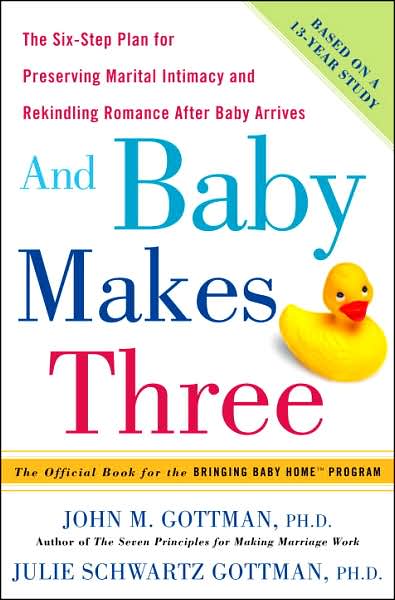
N and I have been reading “And Baby Makes Three,” by the marriage researchers John and Julie Gottman. It is about keeping your marriage alive after Baby arrives, and is based on a 13-year study. I recommend it. Not just for new parents, but the knowledge applies to anyone with kids at home.

Anyway, there was a brief section on the history of childbirth, which illuminates, as history always does, some of the nonsense that we have believed in. A few of the more interesting examples:

1-Women were dying from an infection called puerperal (post birth) fever. A doctor from Vienna, Ignaz Semmelweis, decided to run an experiment with one group delivering their babies via doctors at a hospital, and the other group via midwives. Turned out those at the hospital were four times as likely to die from the infection. Why? Because the doctors’ hands were dirty. In a remarkable display of cognition, Dr. Semmelweis proposed that antiseptics be used prior to the birth. Well, this didn’t go over well in the medical community. Doctors are ‘gentlemen,’ and they certainly do not have dirty hands. How could patients trust a doctor who needed to use antiseptics? Dr. Semmelweis was accused of trying to ruin the reputation of his fellow doctors, was kicked out of the profession, and died in poverty. I’m sure his reward in heaven will be/is great.

2-A young student at Humboldt State University in the sixties (when husbands weren’t allowed in the delivery room) decided to chain himself to his laboring wife. So the doctor called the cops. While the officer was trying to figure out what to do, the baby was born. No charges were pressed, but word spread about this “crime.” Of course this led to other fathers thinking, “gee, I want to be with my wife at the hospital too,” and since then change has thankfully ensued.

I am grateful that we don’t have such weird opinions about childbirth now, but I am not so naïve to think we have it all down perfect. Look back a few years and you’ll think, “wow, I can’t believe that was the popular opinion then.” In a few more years, what are we going to think about our opinions of 2007? Sure, hindsight is 20/20, but sometimes it seems like we were way off. What do you think we are currently wrong/misguided about? Or do you think we have it all pretty much close to perfect right now?

Tuesday, March 27

Our arrogance is our weakness

“The future of a movement is conditioned by the fanaticism, yes, the intolerance, with which its adherents uphold it as the sole correct movement…”

“The greatness of every mighty organization embodying an idea in this world lies in the religious fanaticism and intolerance with which, fanatically convinced of its own right, it intolerably imposes its will against all others.”

“I will give a propagandistic cause for starting the war, never mind whether it is plausible or not. The victor shall not be asked, later on, whether we told the truth or not. In starting and waging a war, not the right is what matters but victory.”

“German forces quickly overran the Polish army. In less than three weeks they changed the map of Europe and killed 70,000 Polish soldiers, wounded another 133,000, and took 694,000 prisoner. Underneath the military statistics, the Polish people’s lives were shattered with suffering that numbers can never quantify. The Nazis justified their actions in the worldwide court of public opinion as preemptive self-defense.”

Do any of our current ideas sound similar to these? Do we see the cause of America and democracy as the “sole correct movement?” Are we “fanatically convinced” of our own right? Are we honest in our motives for war and what is actually going on? Have more been killed post-Saddam than pre? Are we willing to think about that? Do we practice preemptive self-defense?

Before I start waxing too political, what about our personal lives? I believe they are often governed by the same ominous principles. Is our opinion right and everyone else’s wrong or at least misguided? Are we intolerant of different views, even in our personal relationships? Do the ends ever justify the means? Surely it is good to have opinions and values, etc. But when do they cross the line? I think the difference is in our level of arrogance. We can be sturdy yet humble (and I don’t mean the Limbaugh style humility, “I may be wrong, but I’m right”) in our views, and don’t need to bend over with every new strand of opinion, but we can also avoid becoming a source of aggression in our interactions. We must always be willing to humbly admit that we may be mistaken, or at least willing to learn more and consider alternate ideas. I think it is dangerous to become so arrogant that we think we know better than everyone else. When we are a source of aggression to those around us, we are contributing, in however a small way, to the conflicts of nations.

The first three quotes are from Adolf Hitler. The last one from is Alex Nibley, from the book Sergeant Nibley PhD. Thanks to wp for the book!

Monday, March 19

William Wilberforce. And movie ratings.

I just saw the movie, “Amazing Grace,” which is about the abolition of the slave trade in the British Empire. I highly recommend it, and for those sensitive people out there (like me), remember to bring your hanky. The movie is based on real people and events, but the main character, William Wilberforce, is so caring and compassionate that he seems more like a Dickens character (like Nicholas Nickleby—haven’t read it but the movie is good), rather than a real person. But it’s still refreshing to see movies about positive historical role models. Despite his being British, I think Wilberforce should replace Jackson on the $20 bill (Trail of Tears, anyone?). His life is certainly a better model for ending racial discrimination that Jackson’s was.

Incidentally, the song “Amazing Grace” was written by John Newton, a slave ship owner turned monk who counseled Wilberforce on his journey to overturn the slave trade.

As for movie ratings (for those who are interested in such things), there is a site called kids-in-mind, which rates movies for content. It’s not perfect, but it’s a good alternative to the MPAA, which is unreliable and inconsistent at best. Kids-in-mind gives a number rating from 0 to 10 for three categories: Sex, Violence, and Profanity. They also explain in detail (if you really want to know) why the movie rates high or low in a category. The MPAA rating is included if you want to compare. Click here to go to the site.

A few samples of their ratings: The Return of the King: 1.7.1 (sex 1,violence 7, profanity 1), Casino Royale: 5.7.4, Titanic: 5.6.6, Schindler’s List: 6.10.5, and Amazing Grace: 2.4.2. Maybe this will help to curb the silly “R is bad PG-13 is good” dichotomy, and allow people to make better entertainment decisions for their kids and for themselves.